Welcome to this week’s report.
Last time Sandy was away – week commencing 31st March, I opened with the following:
“The weather on Speyside has been more Arizona than Aberlour, with cloudless blue sky days and ground frost most mornings. Temperature fluctuations through the day have been as much as 20 degrees in the upper catchment. Not ideal conditions for catching salmon, with the river dropping to summer levels by the end of the week.”
Well, it’s cut and paste for that paragraph. Indeed, it would have been appropriate for each of the five weeks since then. We are in an unprecedented situation in terms of river levels for the time of year, at least in living memory.
After the sad news of the closure of our neighbouring river, the Findhorn last week, SFB Board Chairman Peter Graham has issued the following statement:
“I write to you as chairman of the Spey board to remind you of the extraordinary weather conditions that we are currently experiencing in the north east of Scotland.
We are well below summer level in the river Spey and there is no water in the hills in the form of snow. Water tables are low. There has been no rainfall for six weeks and we are not expecting any for the next three weeks.
The lack of volume of water in the river means that the temperature of the river is fluctuating rather than remaining constant as it would be with a larger volume of water less likely to rapid heating during the day and cooling at night. As a result temperatures are varying significantly from day to night and we are seeing rises and falls of between 3 and 5° over that period, and, although temperatures are not exceeding the 20°, where many rivers restrict fishing, they have reached 18° and with the temperature fluctuation, the fish are significantly stressed. The lower warmer water also becomes increasingly deoxygenated, adding to the problem.
We are also seeing a significant outbreak of saprolegnia (a fungal disease) which is causing some Fish to die in the river. These are of course our most valuable spring fish and we wish to reduce the impact of fishing in this instance.
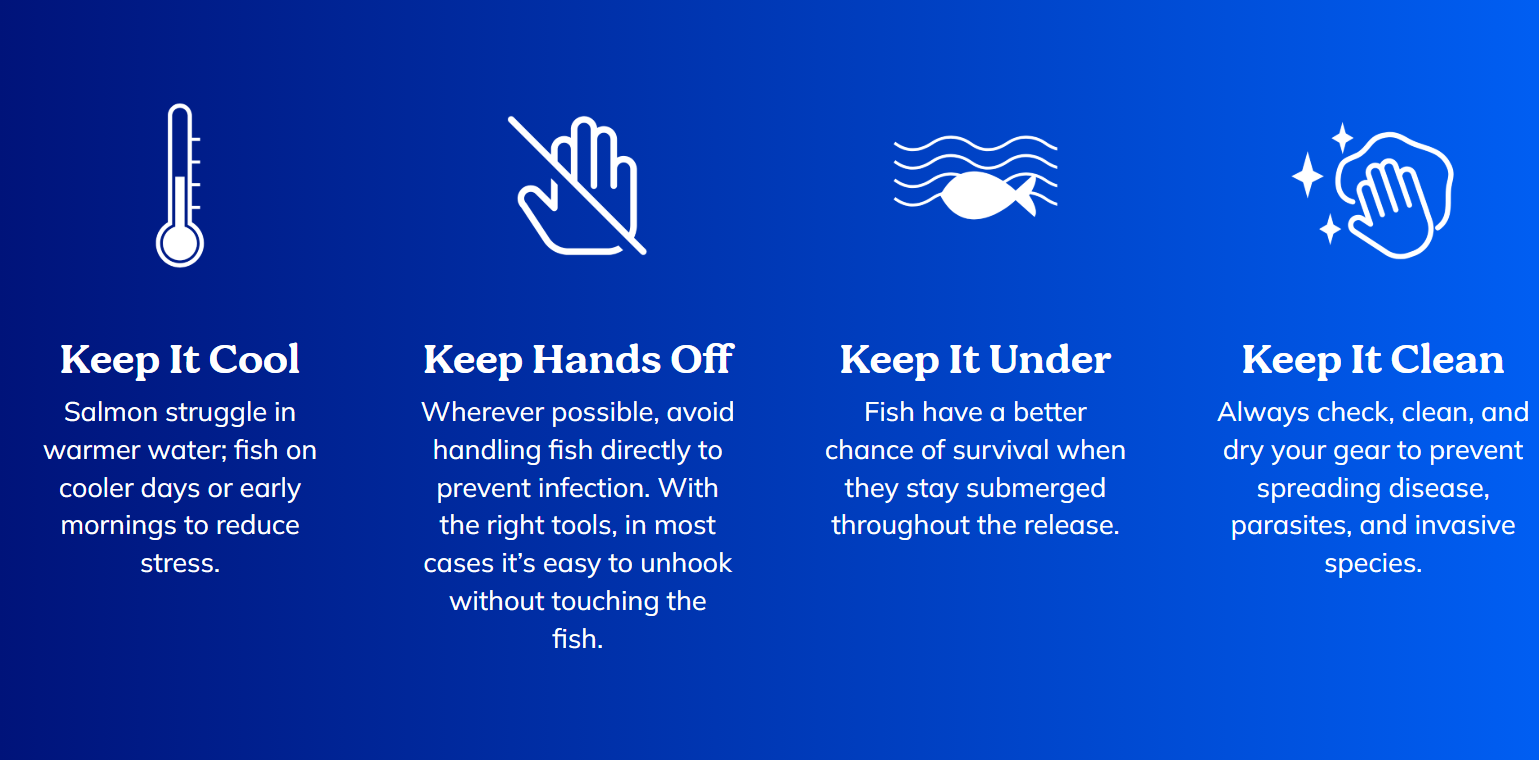
On this scientific evidence the Spey board reminds all of their constituents that the proper handling of fish caught is imperative and consideration should be given in these conditions to minimising the stress on Fish.
The Board has instructed additional survey work in the river over the next week and will update with additional advice as the science determines.
The Board is not calling for a closure of the fishery but is asking proprietors, and guests to the river, to exercise proper restraint and consideration for these wonderful creatures.”
This situation brings into sharp focus the challenges facing our salmon both in the marine environment and in their home rivers. It might be tempting to look at threats further afield to account for the decline in numbers of returning fish over the past 15 years, but the current state of affairs highlights the dangers of assuming that everything is fine on our own doorstep.
As you might be aware, there is currently a planning application for a hydrogen production plant at Ballindalloch on the middle river. This facility would draw around 500,000 litres of water a day from the Spey catchment. The river is already one of the most heavily abstracted in Scotland. In the current weather conditions it seems absurd to even consider such a proposal in the light of the river’s status as a Site of Special Scientific Interest.
Ian Gordon has written an excellent and considered article on the pressures facing the river in these difficult times. As a former ghillie and a long standing friend of the Spey, his words carry weight. You can read the article here.
And, if you haven’t done so already, please get involved in the Release the Spey campaign and sign the petition. You can find the link to the campaign pages here.
Work to ensure that everything is being done to maintain and restore the river to the best condition possible must continue. This includes short term measures such as maximising water flows, fishery protection, juvenile monitoring and supplementation where appropriate, and ensuring as many smolts as possible make the dangerous journey out to sea, as well as longer term measure such as habitat improvement.
I have heard a number of long standing Spey anglers and ghillies commenting recently about the volume of sand and gravel moving down the river, in some cases shallowing out favourite pools and salmon lies.
I’m aware that tree cover along the banks is regarded by some as a trivial issue. But along with providing shade that helps to control water temperatures, trees and other bankside vegetation supports the structure of the river banks preventing erosion – sand and gravels being deposited in the river.
As well as being a source of aggregate that is washed into the pools, erosion of the banks leads to a widening and shallowing of the river channel. Flows are further reduced, the shallow water warms more quickly and all the negative impacts of a drought such as the current one are multiplied. This is a vicious cycle that must be prevented and along with other measures, will help in the medium and long term.
As you can imagine, the fishing report this week is a short one. However, some anglers who did persevere in such challenging conditions were rewarded. I’m sure those fish that were caught will live long in the memory of those who were successful.
We’ll start at the lower end of the river with Andy Milne reporting from the Association Water at Fochabers:
“Despite the conditions, we managed 5 for the week. Ronnie Fraser had a 7lb fish on Monday from The Pot, Andy Goodenough had 2 midweek, 9 & 13lbs, both from Braehead. Finally, Allan Crook had 2 on Saturday, 6 & 8lbs from the pot and Snorkel. I heard that another fish was lost at the net too.
Upstream at Gordon Castle, Lewis Webb summed up their week as follows:
“A tough week of conditions with the evenings providing the most sport.”
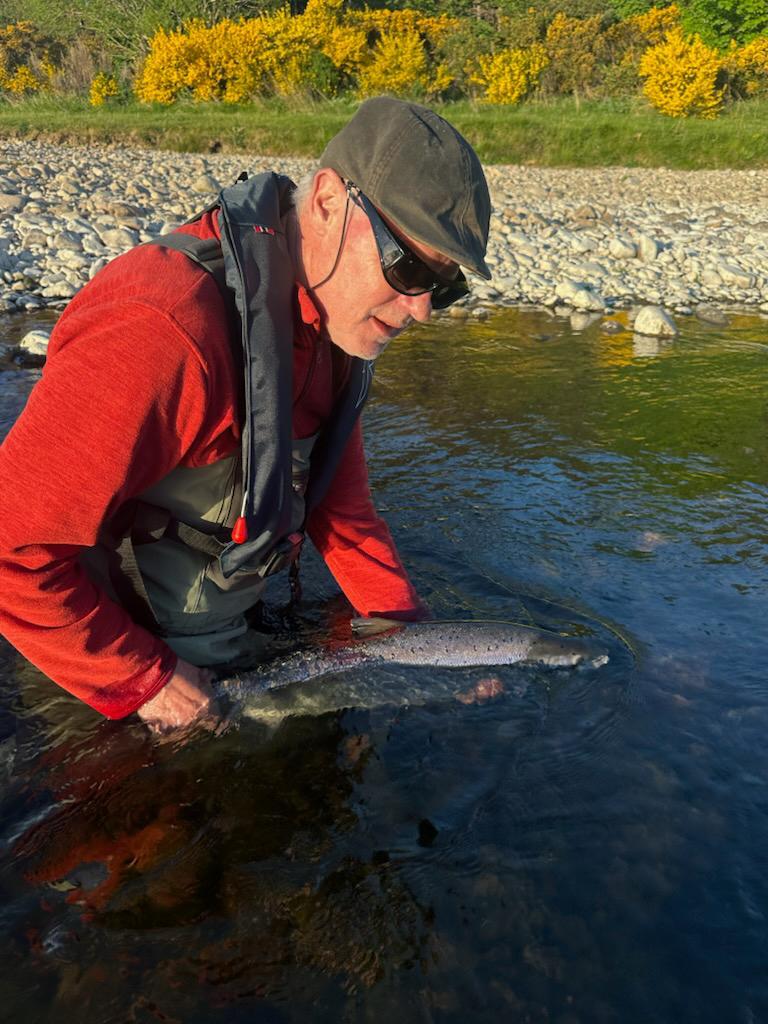
First-class fish handling from a Gordon Castle angler.
Andy Gunn was delighted to report a first Spey fish for one of his guests at Orton.
“A tough week of conditions yet again but perseverance pays off occasionally!
Andrew Templeton fishing Orton for the 1st time landed a nice 10lb fish from Island point on Tuesday at midday.
Returning angler Richard Pulleyn managed a 7lb fish from Junction on Wednesday morning and German angler Siggi Schneid fishing the Spey for the 1st time landed a fish of about 13lb from the Turn on Friday evening.”
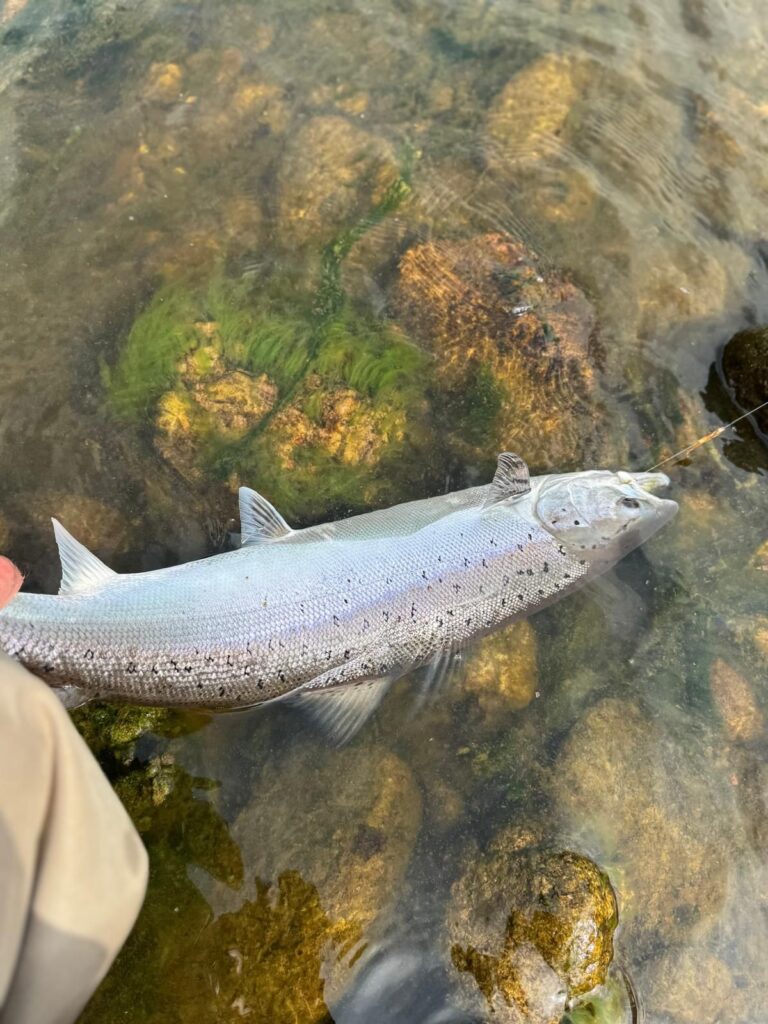
Andrew Templeton’s fish from Island Point.
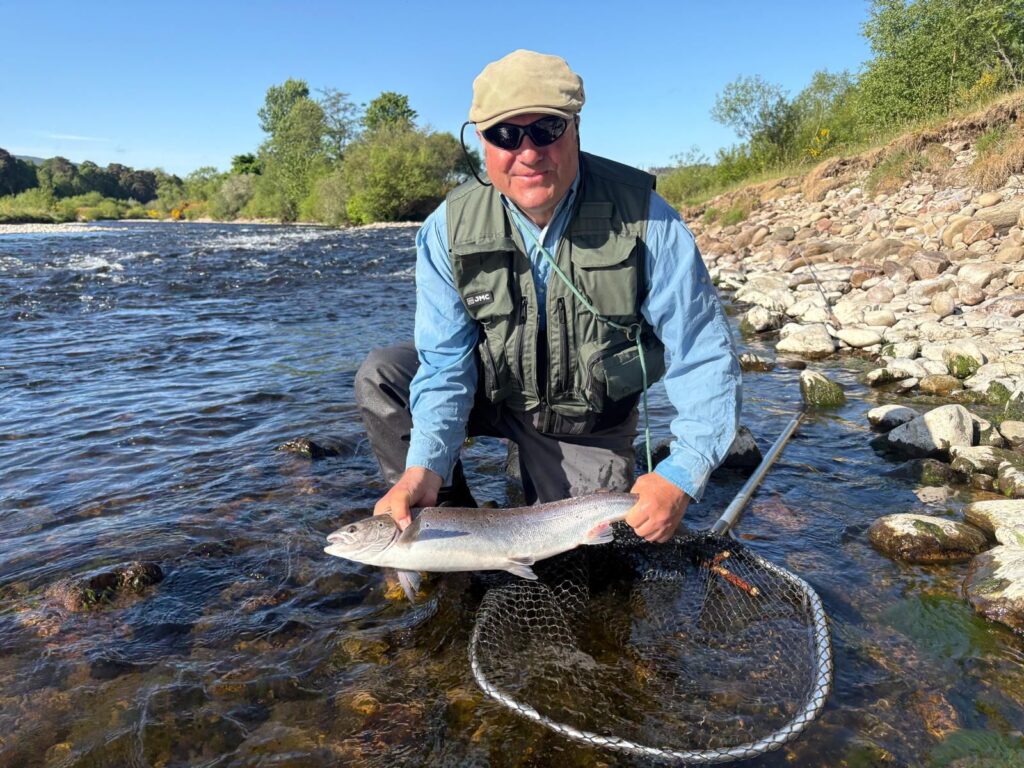
Richard Puleyn in Junction
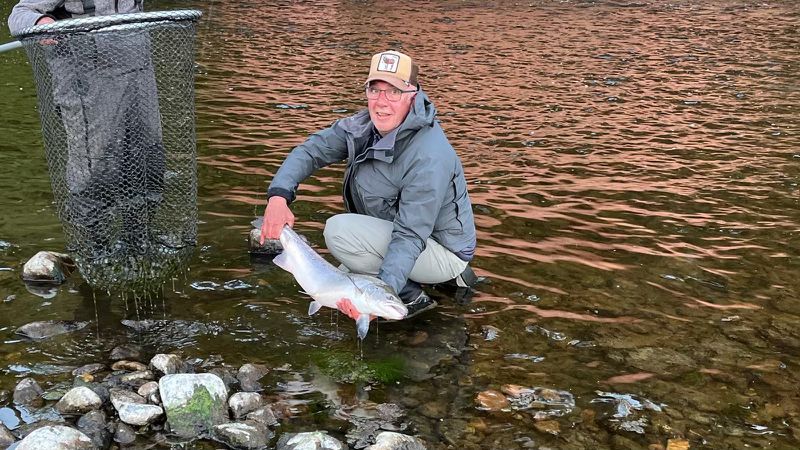
Siggi Schneid with his first Spey salmon.
Moving upstream to Delfur where a stoic Mark Melville tells of another tricky week for his guests.
“Another tough week of bright sunshine and cold Northerly winds most days. The low water not the best but the cold nights have helped keep the water temperature down.
Team leader Wilson Phillips managed to hold on to two of the three fish he hooked, both from Beaufort.
A very good effort considering how tricky it was all week.
We fished the mornings and evenings to give us the best chance of catching.
Jim Coates had a fine fish from the neck of Sourden one evening assisted by our trial ghillie FWP.
Another fish was caught Saturday evening to give us four for the week.
Hopefully the forecast is correct and we get some rain later in the week.”
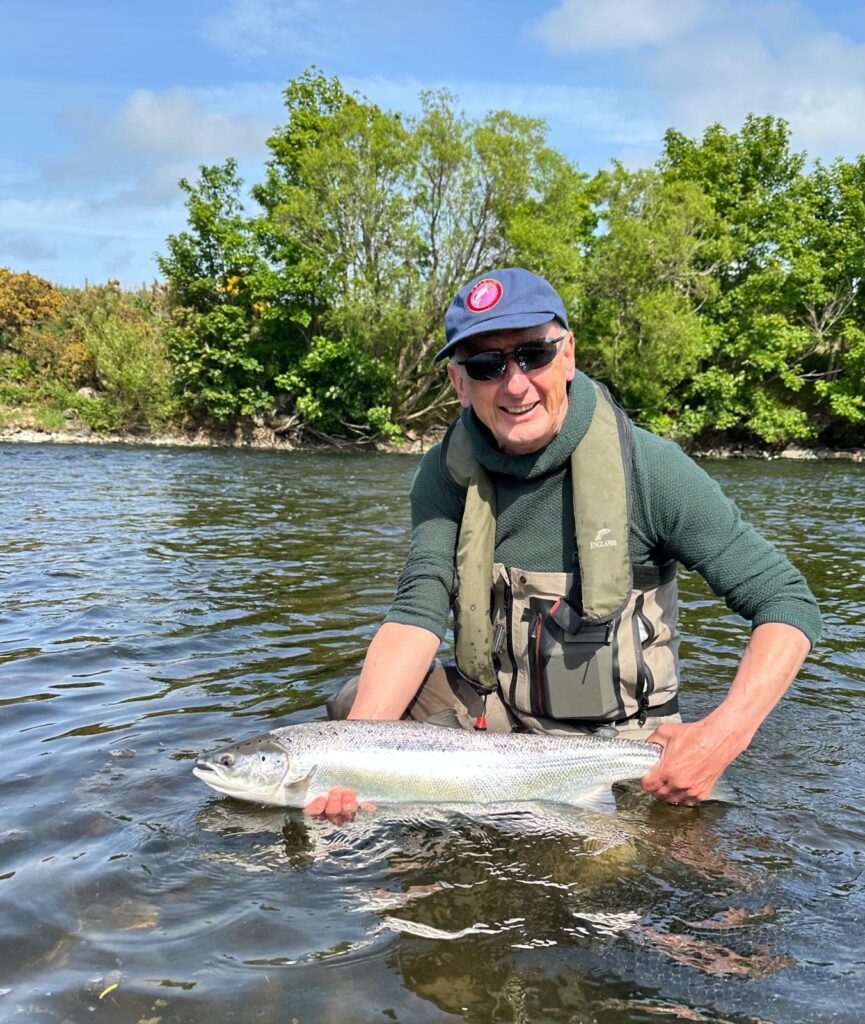
Wilson Phillips with his first fish from Beaufort.
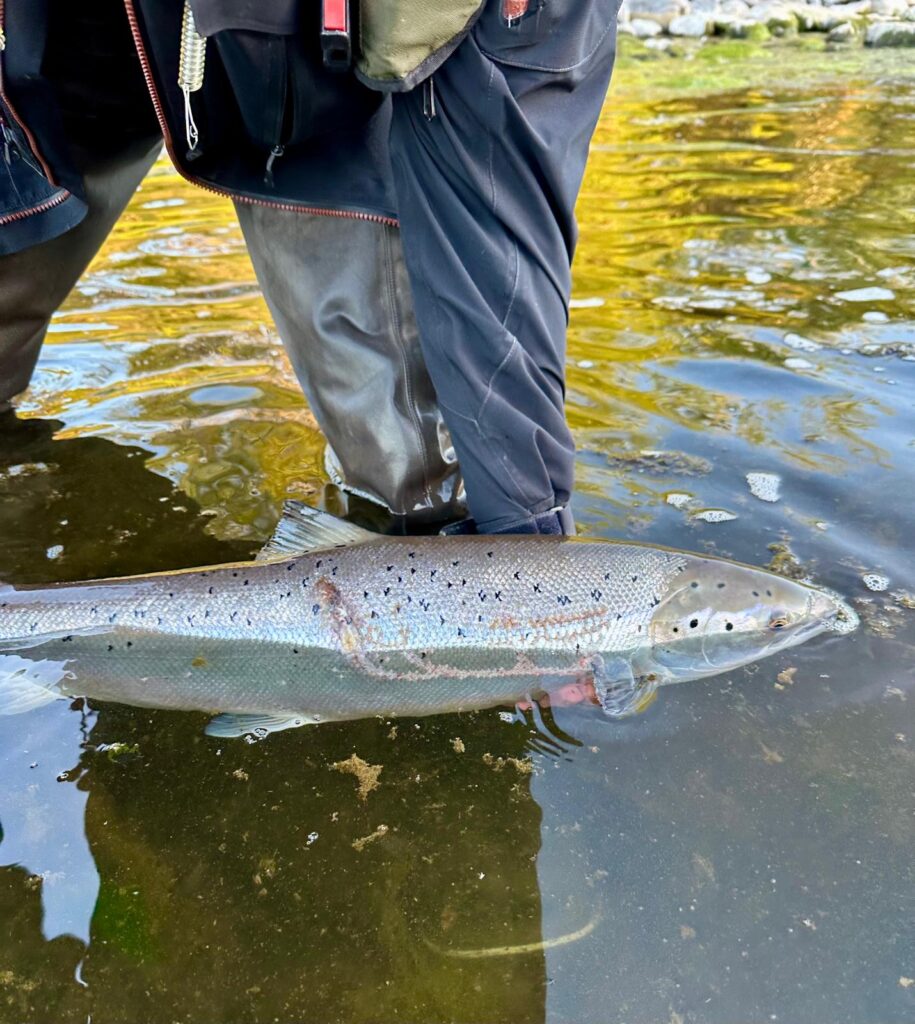
Wilson’s second fish, showing evidence of a fortunate escape.
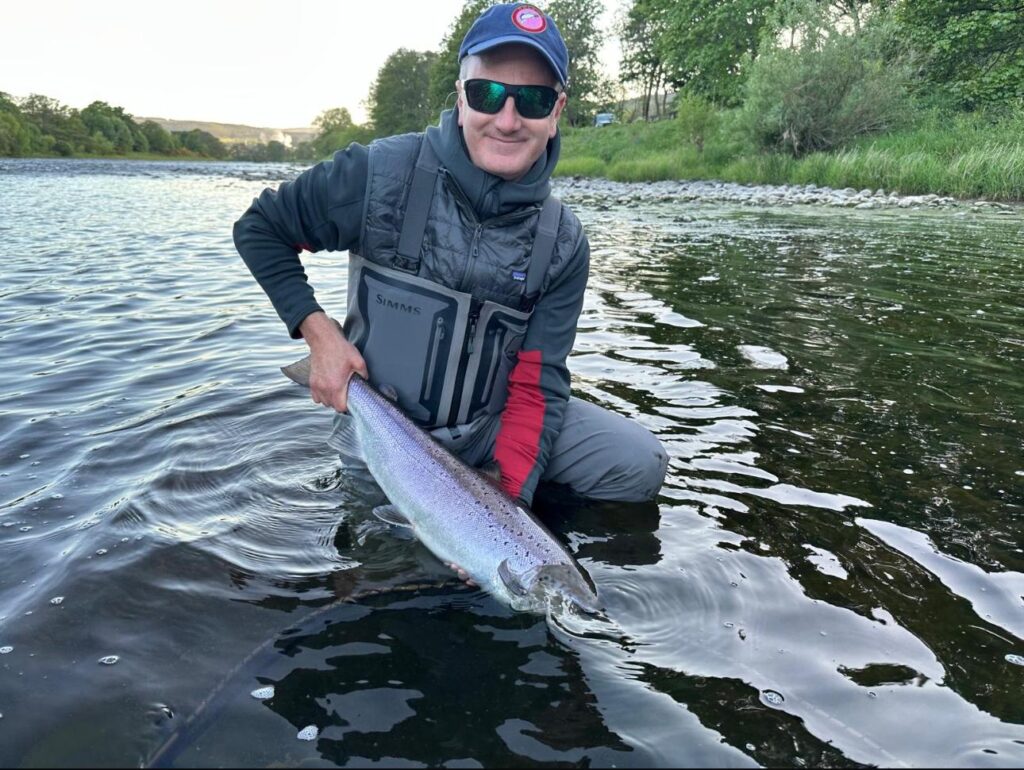
Jim Coates with his fish from Sourden.
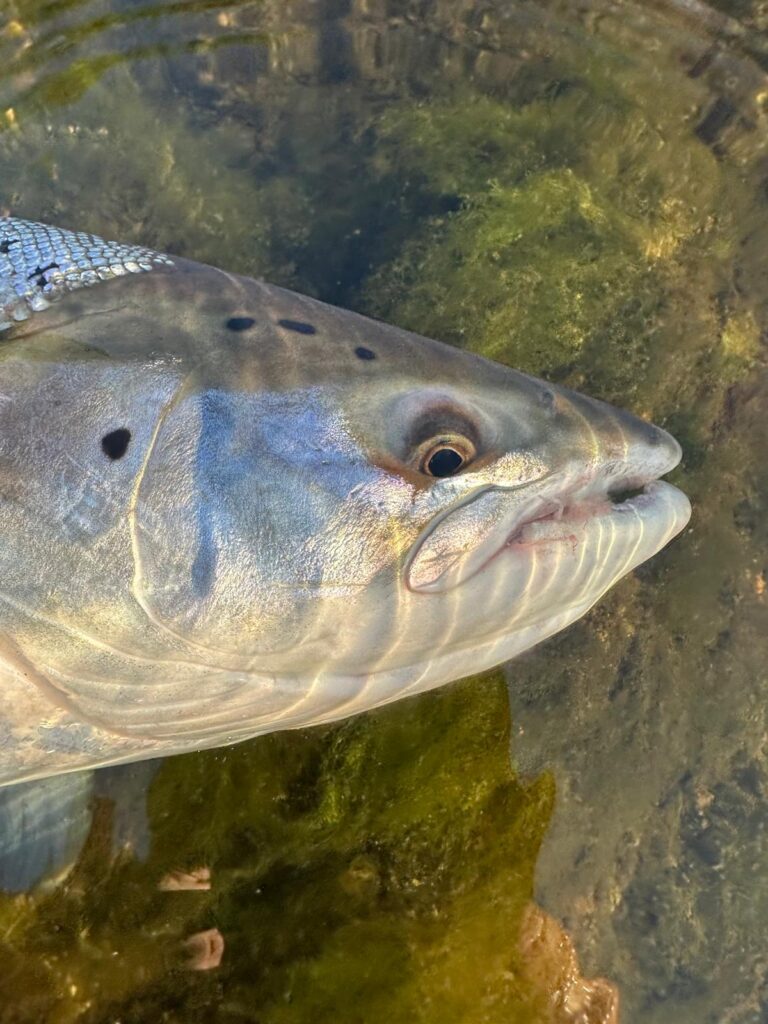
A Saturday Evening Special.
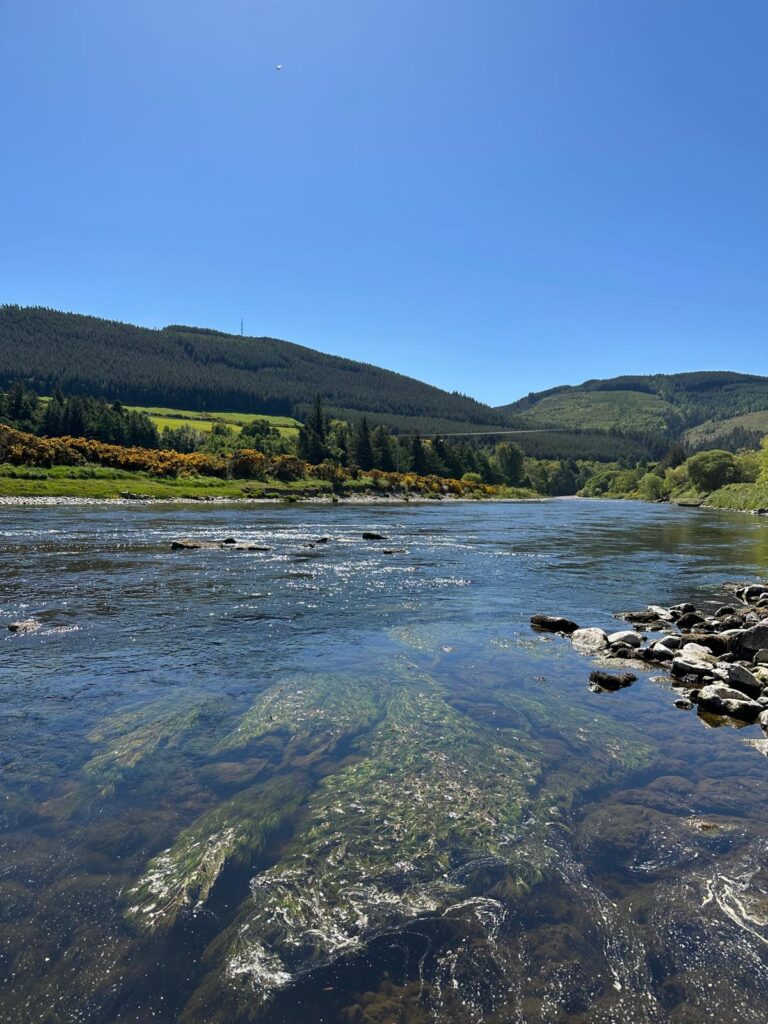
Not a cloud…
Nothing to report this week from Robbie Stronach at Rothes and Aikenway, so we’ll move on upstream.
“This week at Costa Del Arndilly, we had Richard Hollingbery and his band of merry men for the first 3 days.” writes Euan Reid.
“On Tuesday evening, Nick Warren had a 10lb fish from the neck of Cobble Pot, right bank.
Dr Miles Apthorpe worked his magic on Wednesday in the bright sun, just before lunch, 10.5lb in the Arns.
The second half of the week was more of a family team with Richard’s mum Karen and daughters March and Rose, and their partners Wik and Rowan. It was lovely to have David and Ann Curtis back with us.
Unfortunately we didn’t get anything second half despite plenty of effort.
The water finished at -8″ on Saturday, but unlike when we’ve encountered this height in years gone by, being so early in the year, the nights are long enough and cold enough that the water temperature is relatively cool, mid 50’s f.
So the fish are fewer than normal, but with cool temperatures, I’m certain we are not putting fish at risk.”
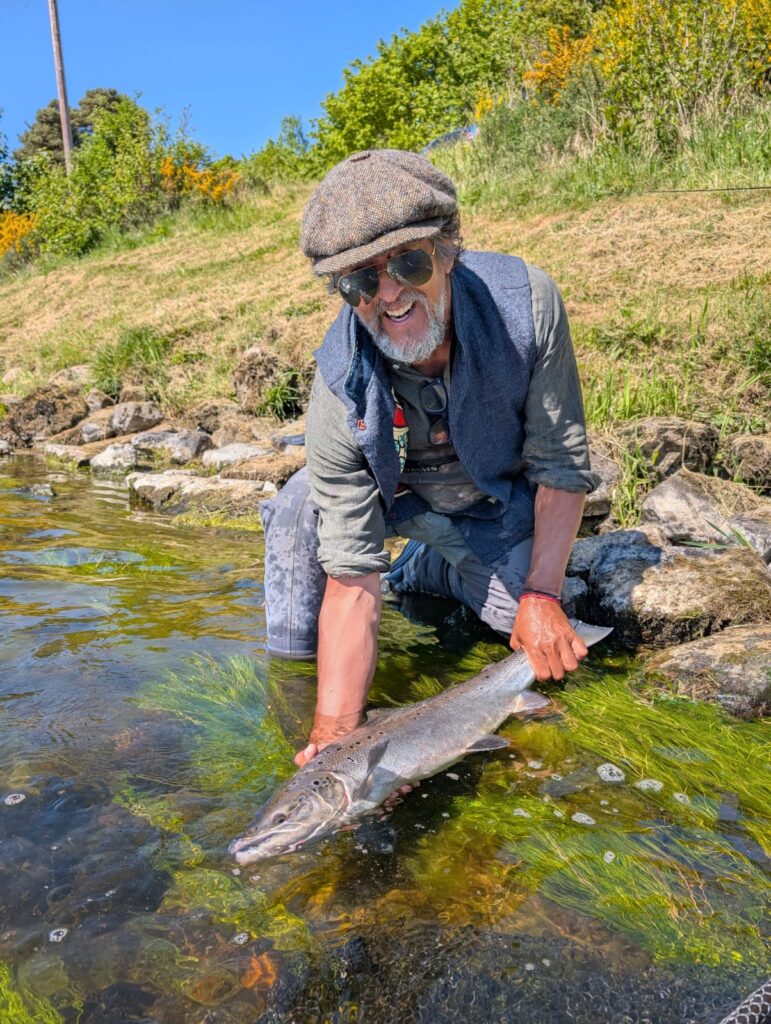
Dr Miles Apthorpe with a salmon in the sunshine.
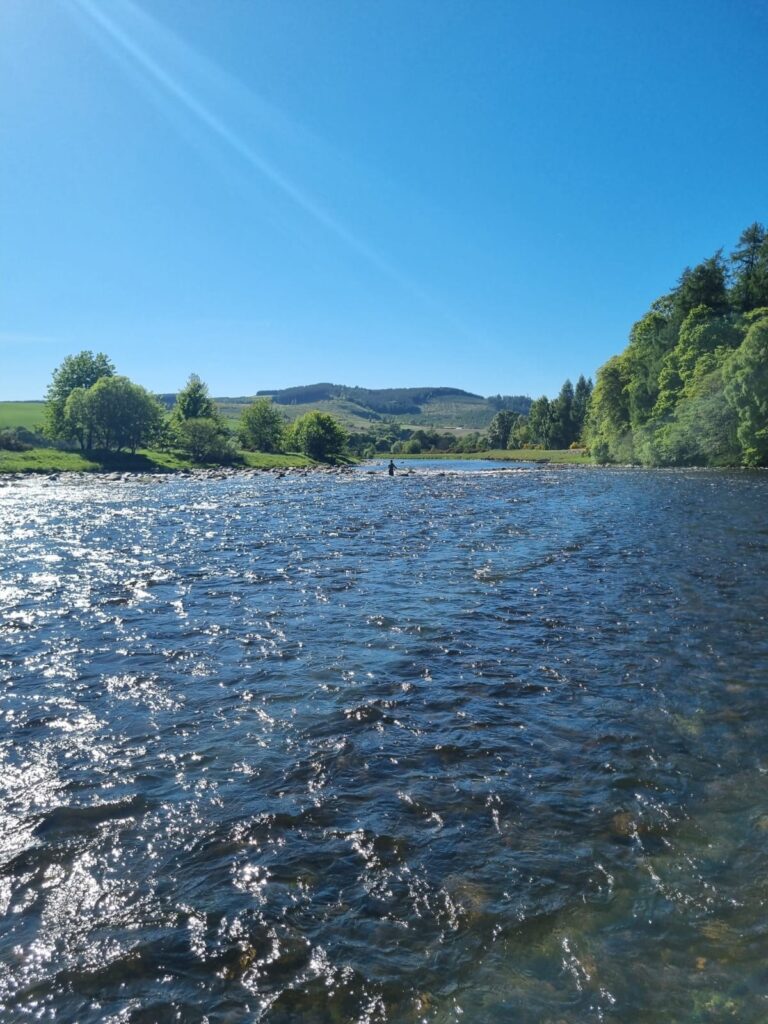
The Algarve… or Arndilly?
The only fish officially reported from beats further upstream was at Macallan by ghillie Richard Whyte.
“The beat was lightly fished during the latter half of the week by a delightful visiting family, made up of both experienced rods and a couple of keen novices. Despite the challenging conditions—bright sunshine and worryingly low water throughout the week—fish were seen daily, and the team showed real determination, covering the pools thoroughly, especially during the cooler mornings.
The highlight came on Thursday morning when Malcolm McPherson landed a beautifully conditioned salmon, estimated at 11–12 lbs, from the Greenbank Pool.
While conditions made things difficult, it was encouraging to see fish present at times, and the effort put in by the team was commendable.”
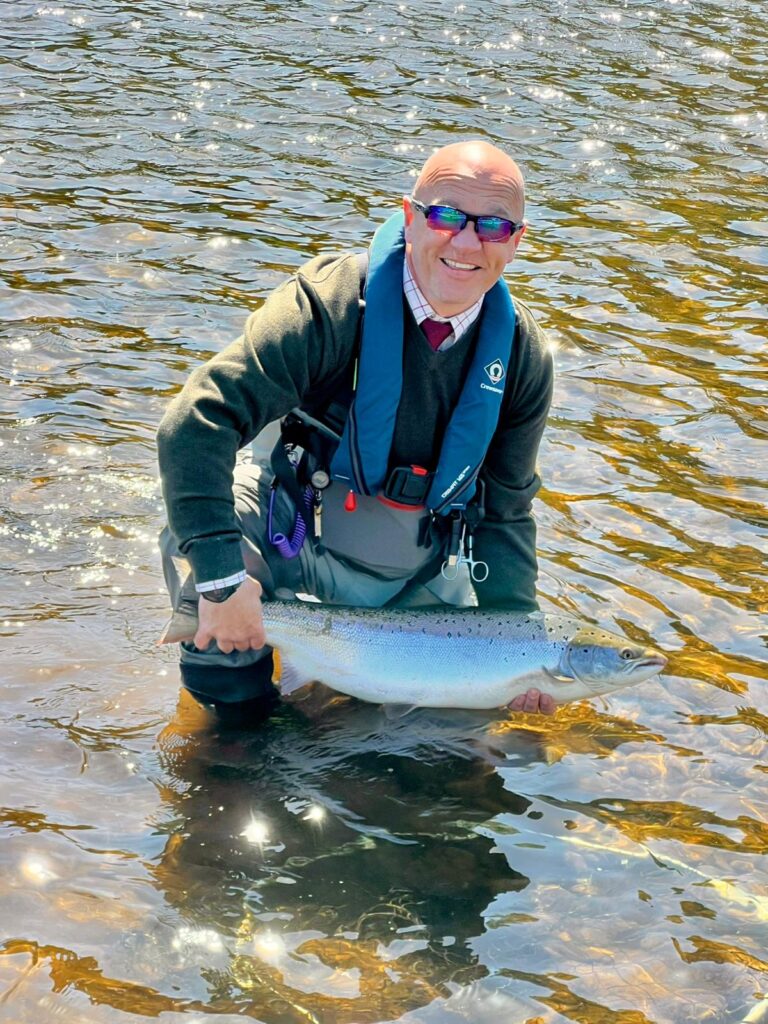
Perseverance pays off for Malcolm Macpherson. Ghillie Richard Whyte safely releasing his fish in Greenbanks.

A furry visitor to the bird feeder at Macallan.
Unfortunately, another challenging week is on the cards. We have had a break from the blue skies and sunshine today (Sunday) but the cold Northerly wind is still around. There is no rain anticipated before the Bank holiday.
If you are a ‘One Week a Year Salmon Fisher’, (as I was for some twenty years before moving up to Speyside), I can sympathise with the feelings of disappointment and frustration that might be felt on reading the last few reports and looking at the weather forecast.
I know it’s ‘that week’ in the calendar eagerly anticipated by so many, and to arrive on a Sunday afternoon after a long drive and see the river in its current condition will be disheartening to say the least.
Please understand if your ghillie isn’t as quite cheery and optimistic as usual, and try to enjoy the other delights of springtime on Speyside if you can. As reported on beats that have seen success, being on the river early and late will maximise your chances. If you are lucky enough to encounter a fish, please play it hard and land and return it as quickly as possible without removing it from the water.
Please also be aware that smolts are making their way downstream at this time of year. With conditions dictating that small flies and long leaders are in use, these precious little fish can often be hooked by mistake. Retrieving a size 14 double from a lively smolt or parr can be traumatic for both parties, so if you do start encountering them, please switch to a larger fly.
A size 8 or 10 low water single hook dressed short and sparse, ‘Dee style’ is a good option when smolts are around.
Finally, my thanks to all the ghillies who take the time on their only day off of the week to provide Sandy and I with the information that fills these reports. I know how hard they all work to help their rods to have a great experience on the river, and how much more difficult the job becomes in the current conditions.
All the best if you are having a cast this week, and please, pray for rain!
Sam Jarman.