A blog by Michael Macdonald
The River Avon (pronounced A’an) is considered to be an extremely productive tributary of the lower Spey catchment, joining at Ballindalloch, the Avon has an impact on the characteristics of the lower Spey in terms of sediment introduction, bolstering high flows, and supporting an extensive juvenile salmon population.
Although the Avon, which joins the Spey in its lower reaches, is an impressive river, the system extends far and high into the Cairngorms to approximately 725m, where it is part fed by Loch Avon, a glacial trough loch. These high altitude, sub-alpine environments are often associated with species such as Arctic Charr, however historic reports of salmon spawning in the high reaches of the Avon sparked our curiosity and we made for the hills on Friday 25th September 2020.
We parked at Faindouran bothy after driving for an hour through the StrathAvon estate, past Inchrory, and into horizontal rain. Things were looking bleak as we set off for the first of the 4 sites of the day.
The first site at 665m above sea level, known to us as UA03, was the first site beyond the previous known extent of salmon spawning. We picked an area where the instream cover seemed good for juvenile fish; large boulder, marginal heath tufts, weed, and bed substrate for protection from aggressive flooding.
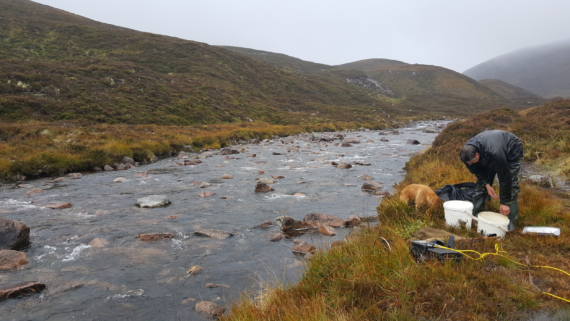
Oligotrophic (almost devoid of instream nutrients) environments such as these are common in our unforested upland streams and lead to low conductivity in the water, thus making effective electrofishing practice extremely difficult. Nevertheless, we cranked up the voltage and set about our work.
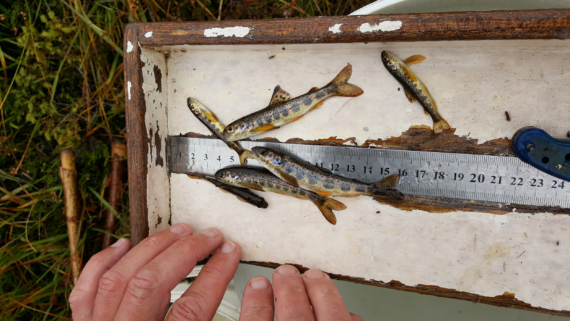
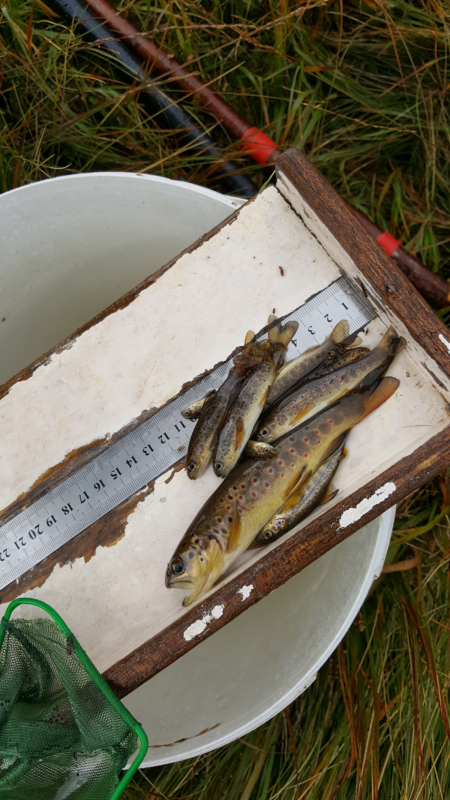
The first sweep; beep, beep, nothing. The second sweep; beep beep, salmon Fry and Parr- wow. The third sweep; beep, beep, a massive splash and a struggle with a mature fish- extra wow.
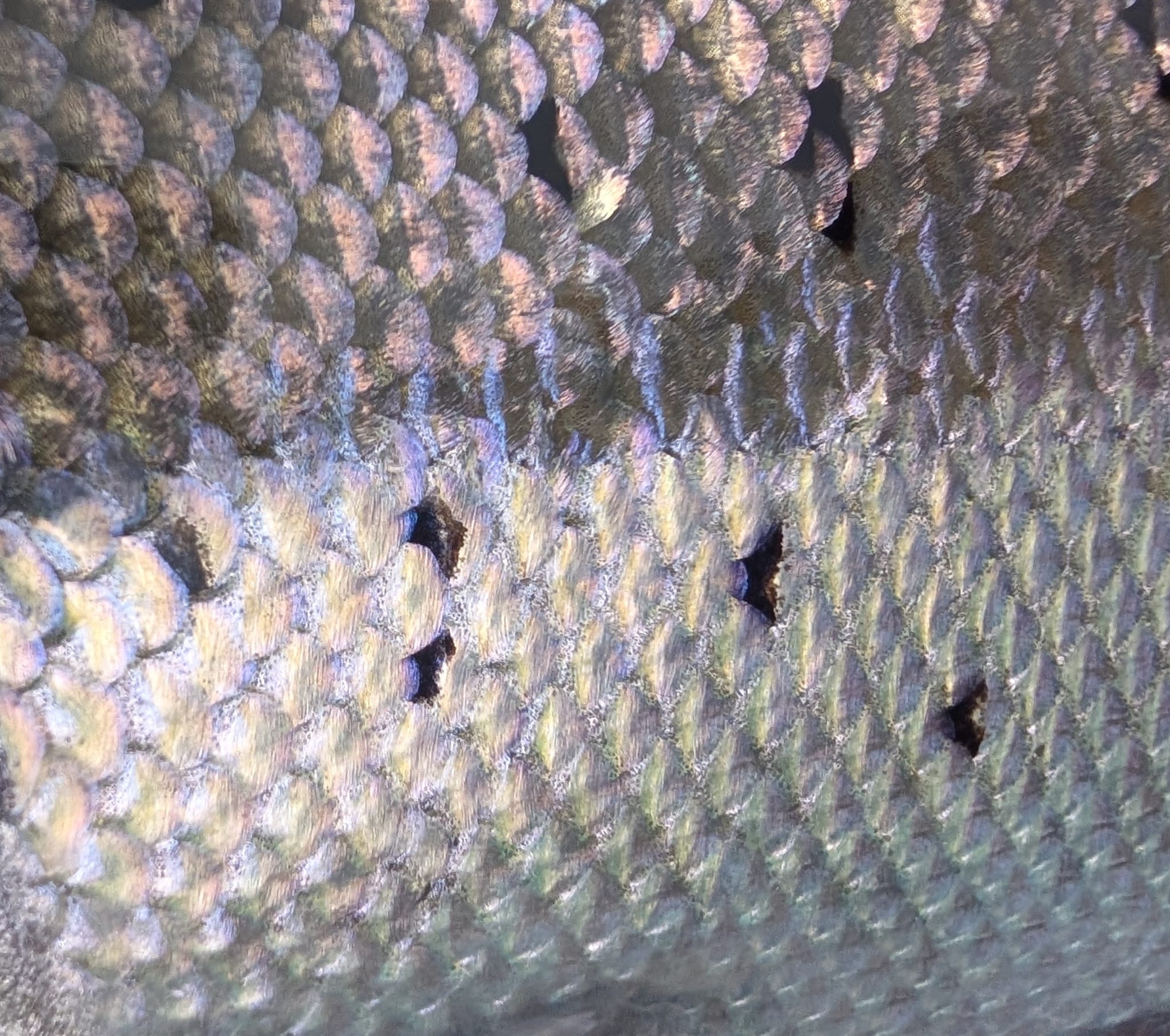
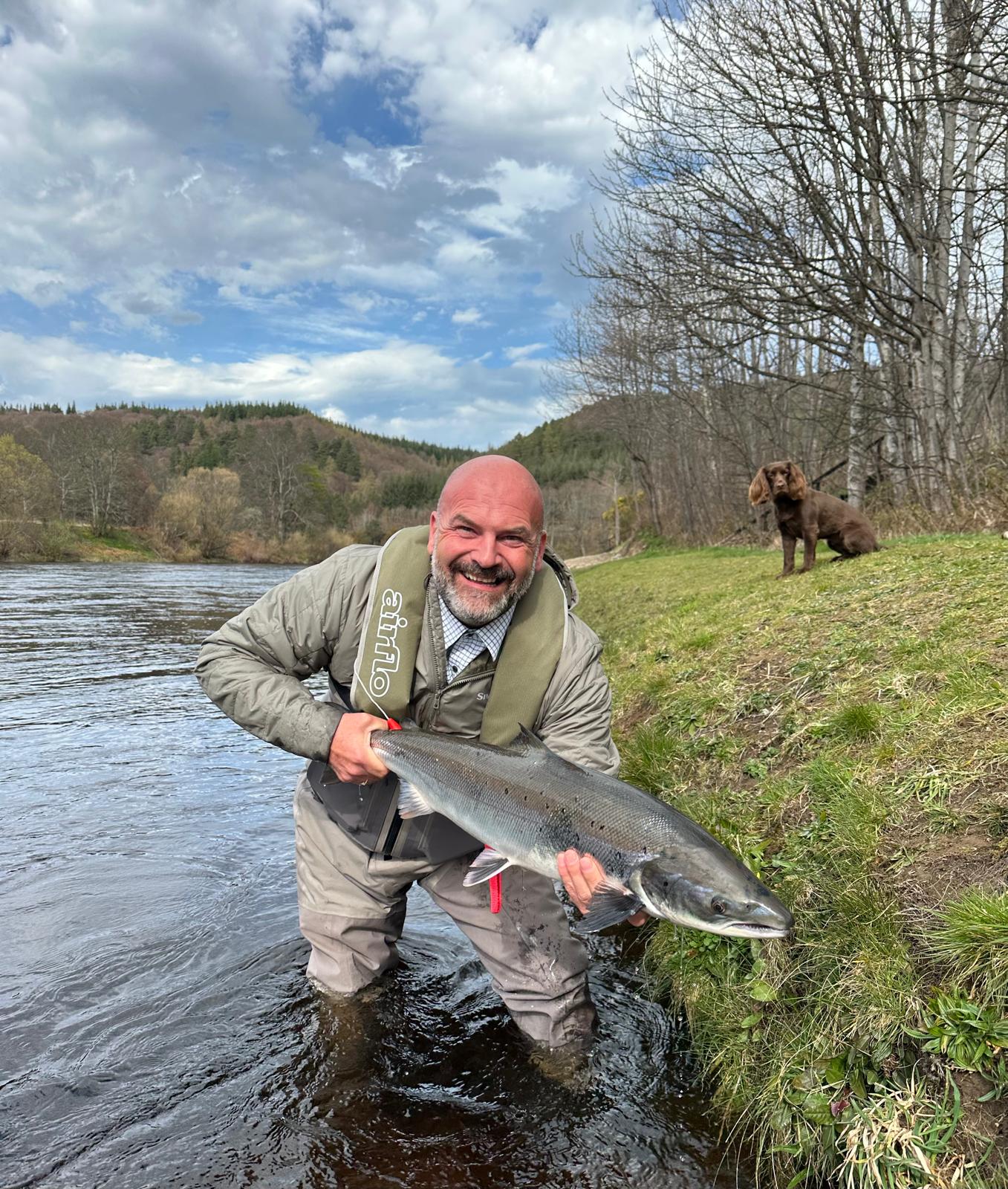
The answer to the question posed at the beginning of this blog, what was the fish? A Sea Trout. Did you guess right?
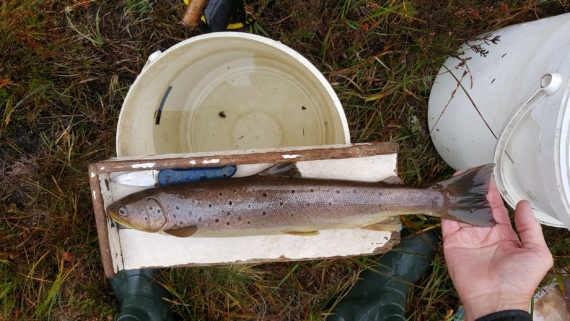
Another thing to mention is the thin condition of the fish and the sunken eyes. Is it possible that this fish had already spawned?
Going through the site, I noted the ease of wading. Rocky uplands burns should not be easy to wade in my opinion, I looked around and noted the cobbled bottom was armoured and weeded, stable but not ecologically optimal, a theme which would continue throughout the day. Finishing up the site, we were pleased with a (relatively) handsome catch of 6 juvenile Atlantic Salmon in 3 minutes and a big trout.
Pressing on into the windy rain, we climbed over a rise which would lose us the river for 20 minutes, upon regaining it, we approached the Fords of Avon refuge, the marker for our second site, UA02.
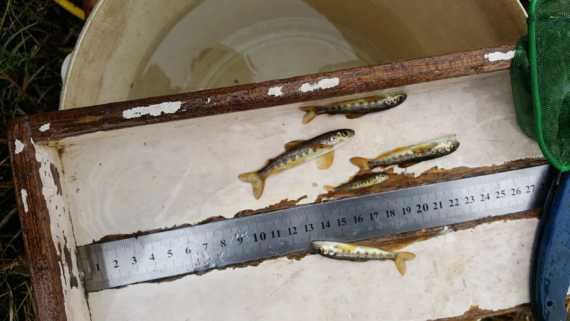
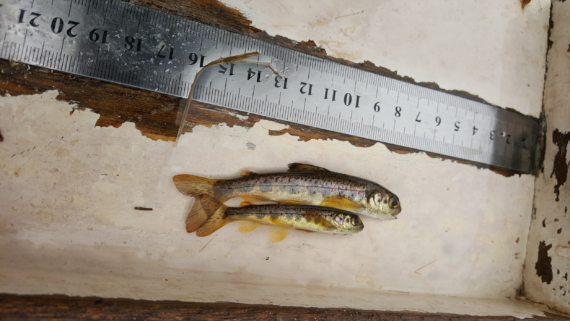
We had received reports in the past that the Fords of Avon was the upper extent of salmon spawning. UA02, at 687m was again armoured and weeded. Suboptimal habitat for juvenile fish and it was frustrating that the most accessible areas were not fully representative of what the upper Avon could facilitate in terms of juvenile salmonids, or maybe they were! That said, a catch of 6 (5 pictured) salmon Parr was great to see, we knew we must go higher.
We had to leave the weather beaten track onto the weather beaten moor in our own weather beaten condition for another 500m past the Fords of Avon where the river changes completely from wide and low gradient to cascade and pool. UA01 was our final site in the Avon mainstem… for now.
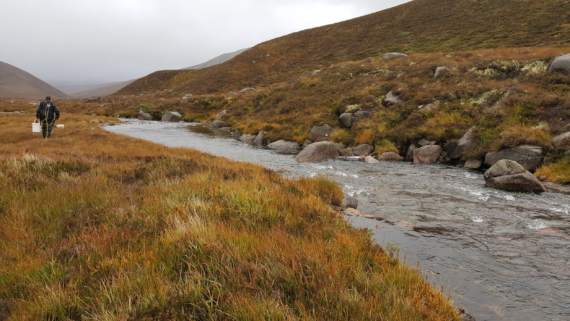
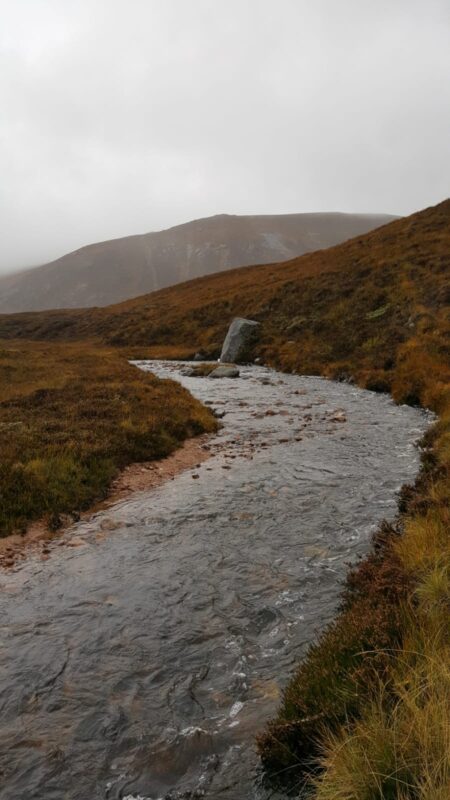
The site UA01 pictured above shows the riffles separated by a deep pool, the final place in the low gradient mainstem where we may find fish. We caught 2 salmon Parr in lean condition, pictured below. At 700m, in pouring rain, in the afternoon, in late September, we knew it was time to retreat.
However, we were not done. On the way back we sampled the Allt Dearg, a tributary we crossed on the way up. Unsure for certain, but this may mean the Red Burn, and given the red granite nature of the local lithology, it makes sense. We saw much red granite cobble and boulder within the burn. Being out and about in the Spey catchment, you come to learn and appreciate the descriptive nature of gaelic naming.
The Allt Dearg, fed from the lochan Bhainne (probably pronounced vae-nee, as many of the Cairngorm munros are) is potentially the highest productive tributary (at 678m asl) in the Avon system and potentially even the Spey catchment. The substrate in the site was the only uncompacted bed substrate of the day with a great mix of boulder, cobble, pebble and gravel. In addition to this, riffle and exceptional undercut trout cover was a prominent definer of this habitat versus the straight cut banks of the upper Avon itself.
An anecdotal side note, the sub catchment of the upper Avon which feeds the Allt Dearg is bare peat and mineral dominated, signifying a very flashy run-off regime which means that it floods a lot faster than the Avon itself does. The flooding leads to undercutting and bank erosion which feeds fresh sediment into the river for fish cover. The Allt Dearg is far more sinuous than the Avon mainstem leading to the assumption that its situation on the margin of a trough valley means that it flows over glacial debris as opposed to the red granite bedrock of the Avon mainstem, in my view, leading to a greater ecological habitat for salmonids.
You decide, and let us know your thoughts!
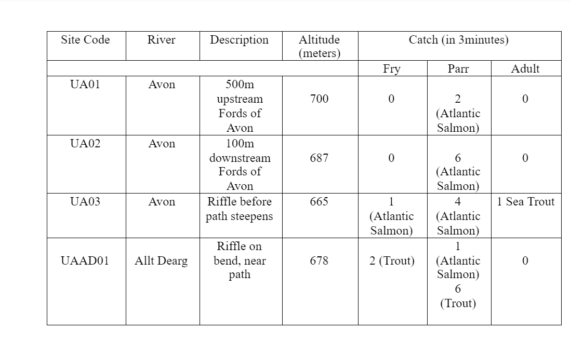
Take note of the table above as a summary of what was found in the upper Avon system, the following graph is an extremely basic way to represent the fish numbers with altitude within the Avon system. Note though that it is not the altitude itself but the impact that altitude has on climatic conditions and therefore weathering processes which have an impact on the fish numbers. For example, it’s colder and there is less time to feed optimally throughout summer.
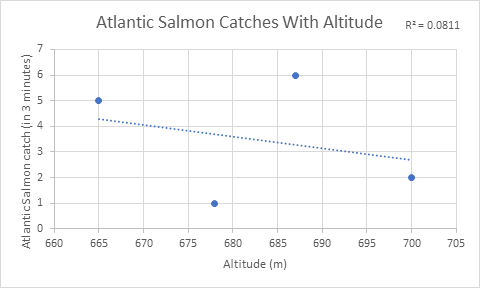
So, satisfied and absolutely soaked, we made for the pickup. Several hours, 15k, and 23 fish later, our excursion to the upper catchment was over and to be reflected upon. 23 fish in a cumulative 12 minutes of surveying isn’t ‘catch of the day’ standard by any means, but for a high altitude tributary, you can see that the Avon retains its status as a great producer- all the way to the end, or rather the start depending on your perspective.
The ultimate objective of finding out if salmon make it to Loch Avon will have to wait for another day, probably even another year, but we managed to enhanced our knowledge of salmon in the upper Avon a good deal further. We may even have caught the highest salmon found in Scotland. The only river that may be able to compete in that regard is the Dee, over to you guys!
Michael Macdonald, Seasonal Assistant Spey Fishery Board, 2019/2020